Angel Village is a 1.7-acre gated community in the heart of Islington, EC1. The scheme comprises 130 luxury apartments across a development with generously planted courtyards and private green spaces — unusual for a central London postcode where most developments offer little more than a lobby and a lift.
The Client appointed us to design the complete interior proposition — from spatial planning and floor plan optimisation through to full interior design specification, CGIs, VR show home, and the property branding and marketing package including brochure, website, and hoarding.
The brief was ambitious: create a development that feels artisan and boutique despite its scale. City Road sits in one of London’s most connected postcodes — minutes from Angel tube, surrounded by the energy of Islington’s creative and financial districts. The market here typically offers two choices: period stock conversions or large, impersonal apartment buildings. Our client wanted a third option — a gated community with genuine character, where each apartment feels individually considered rather than produced from a template.
We were engaged to optimise apartment layouts before construction commenced. Working within the approved envelope, we reviewed each floor plate to ensure the spaces performed at the standard the brief demanded. The optimisation work resolved the kind of issues that compromise buyer experience in developments of this scale: awkward circulation, undersized entrance sequences, living rooms where furniture placement fights the geometry, bedrooms where the only viable bed position puts your back to the window.
Throughout the floor plan optimisation exercise, apartments were redesigned to feel spacious and well-proportioned, with logical flow from entrance to living space. Previously wasted corridor space was reclaimed — no dead space in any apartment.
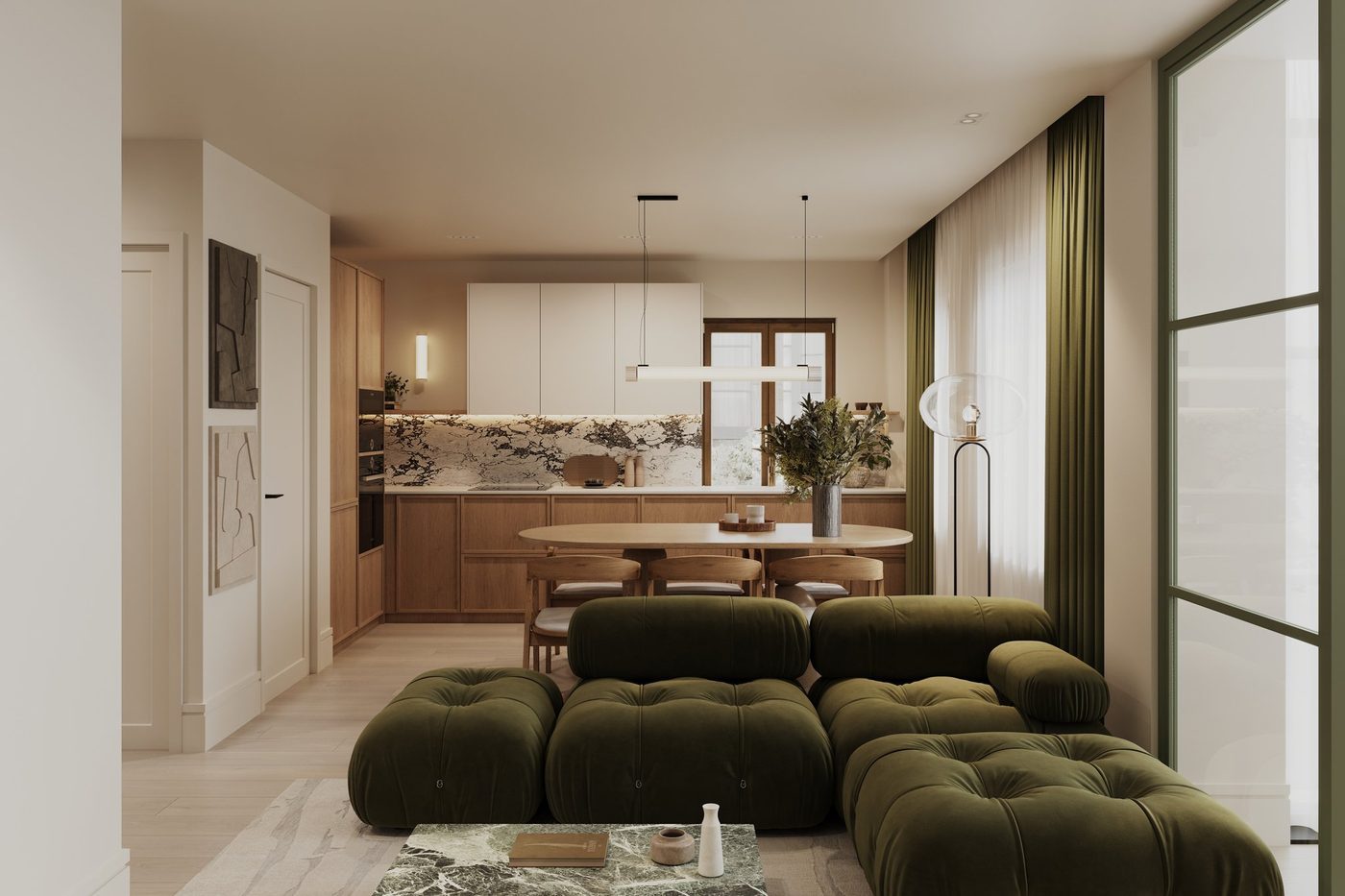
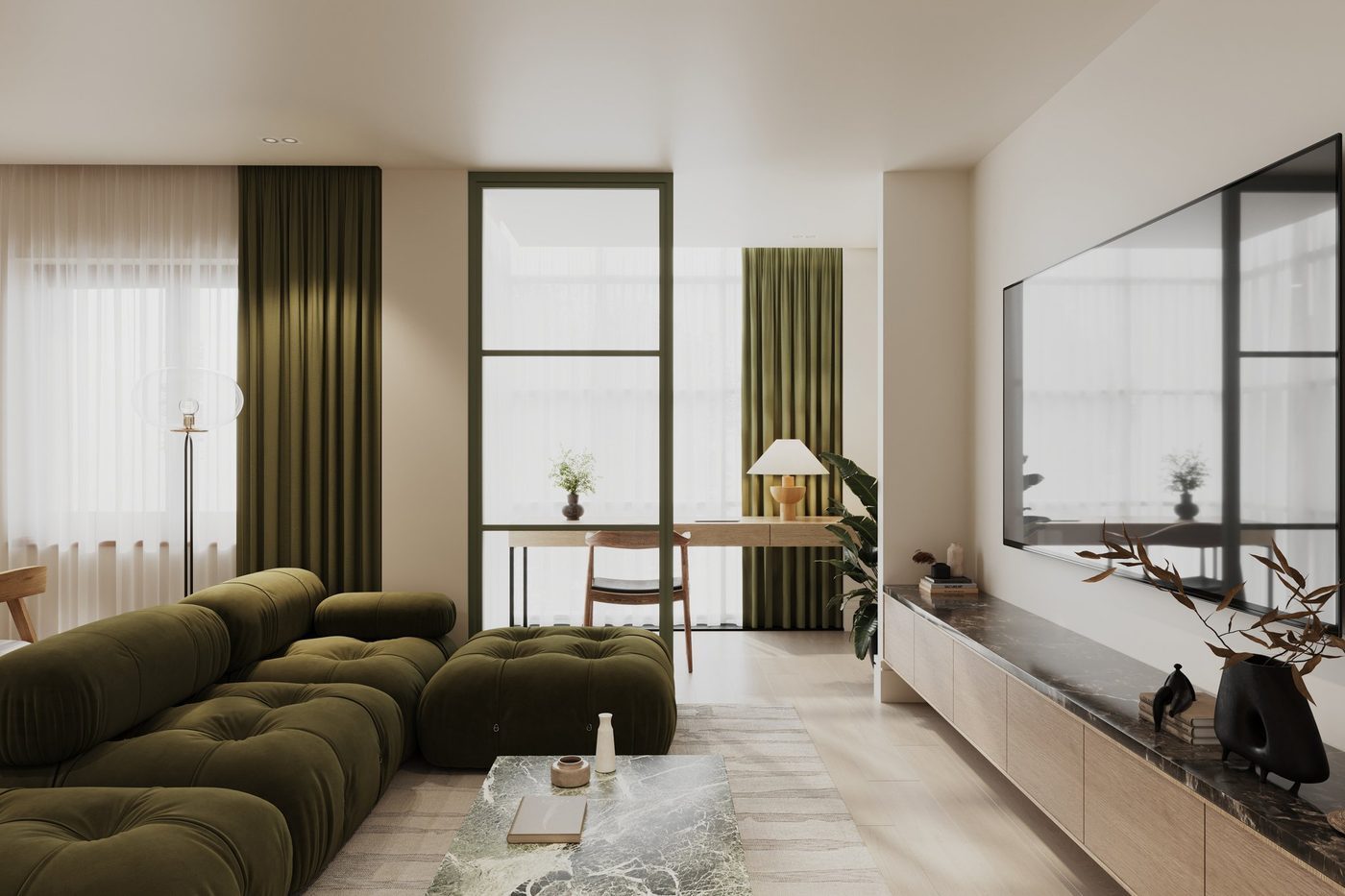
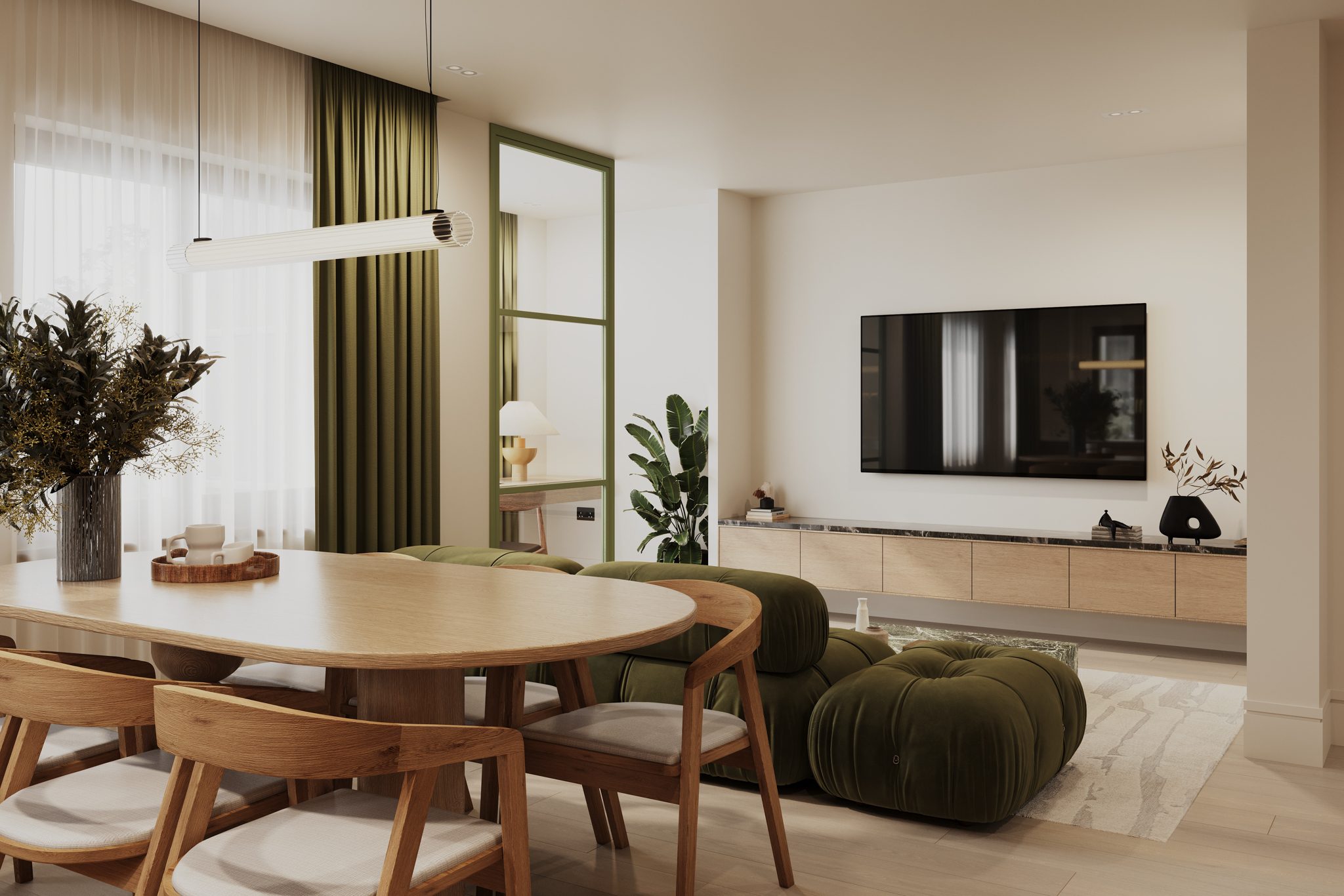
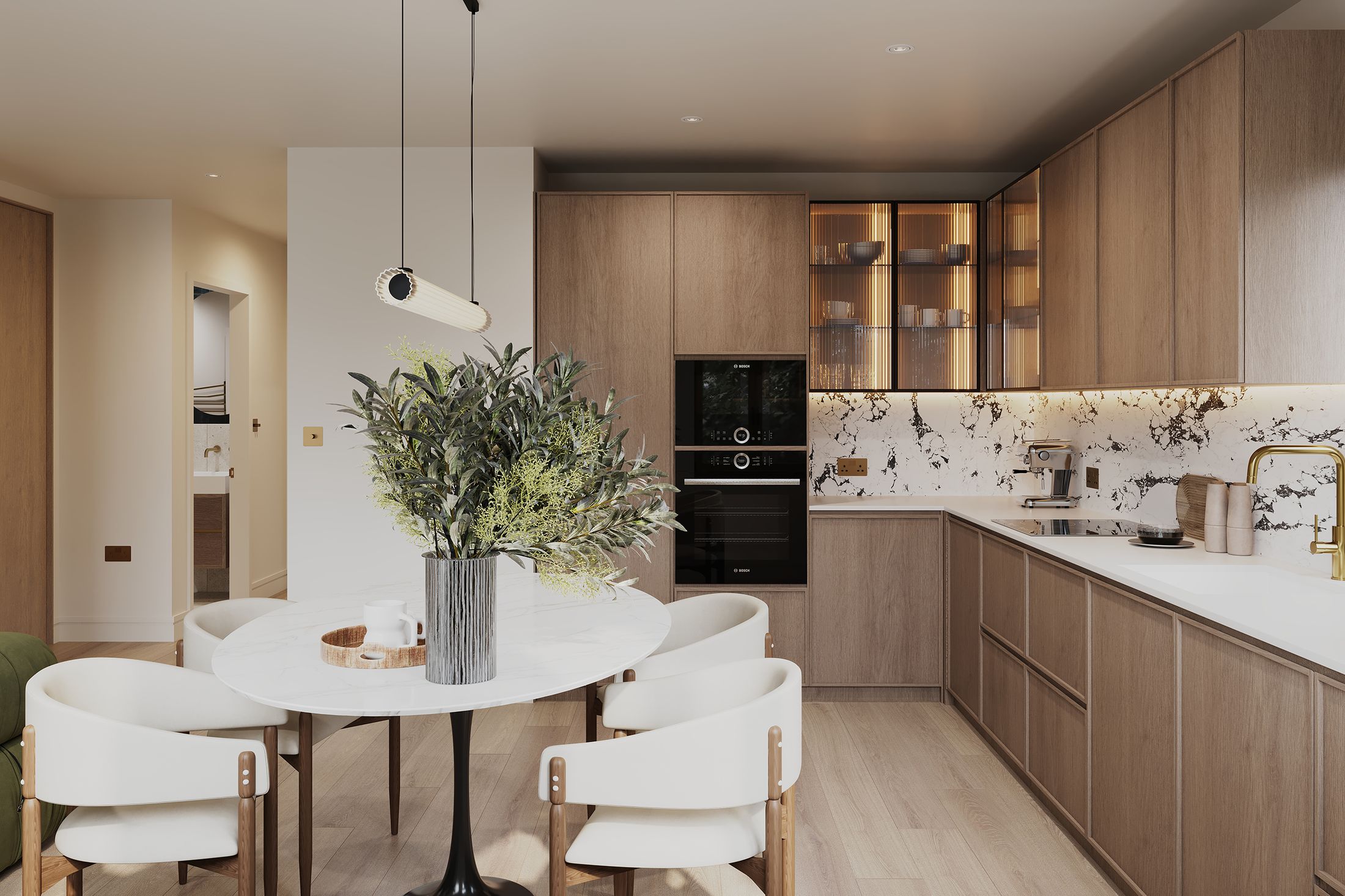
The interior design specification was developed to feel considered and crafted. In a development space dominated by grey kitchens, we took a different design direction entirely. Warm, natural wood kitchens anchor each apartment with substance and character. The flooring is bright and generous — materials with genuine texture and warmth rather than the clinical polish of standard new-build specification.
The lighting design reinforces this — warm colour temperatures throughout, layered ambient and accent lighting that allows residents to shift the mood of a room. Bathrooms are finished to a spa-like standard with considered detailing throughout.
Interior design — warm wood kitchens, textured flooring, layered ambient and accent lighting
After delivering interior specification and produced the CGIs and the VR show home, so buyers experiencing the development virtually were seeing what they would walk into on completion.
We also developed the complete branding and marketing proposition — the identity, the brochure, the website, the hoarding — all designed as an extension of the interiors for the pre-launch. The brand communicates the same warmth and sensibility that the buyer experiences when they walk through the door.
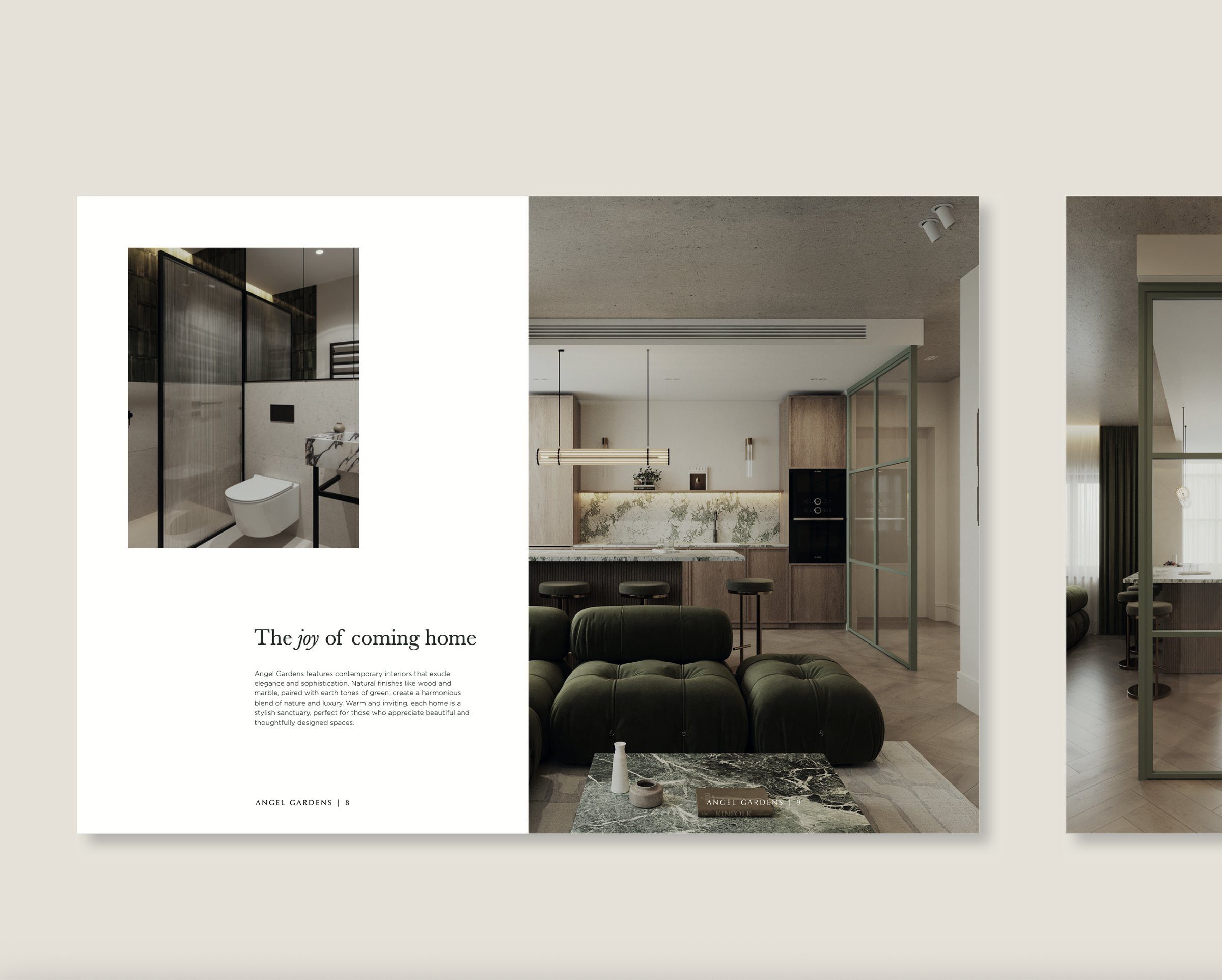
Angel Village website — designed as an extension of the interior specification
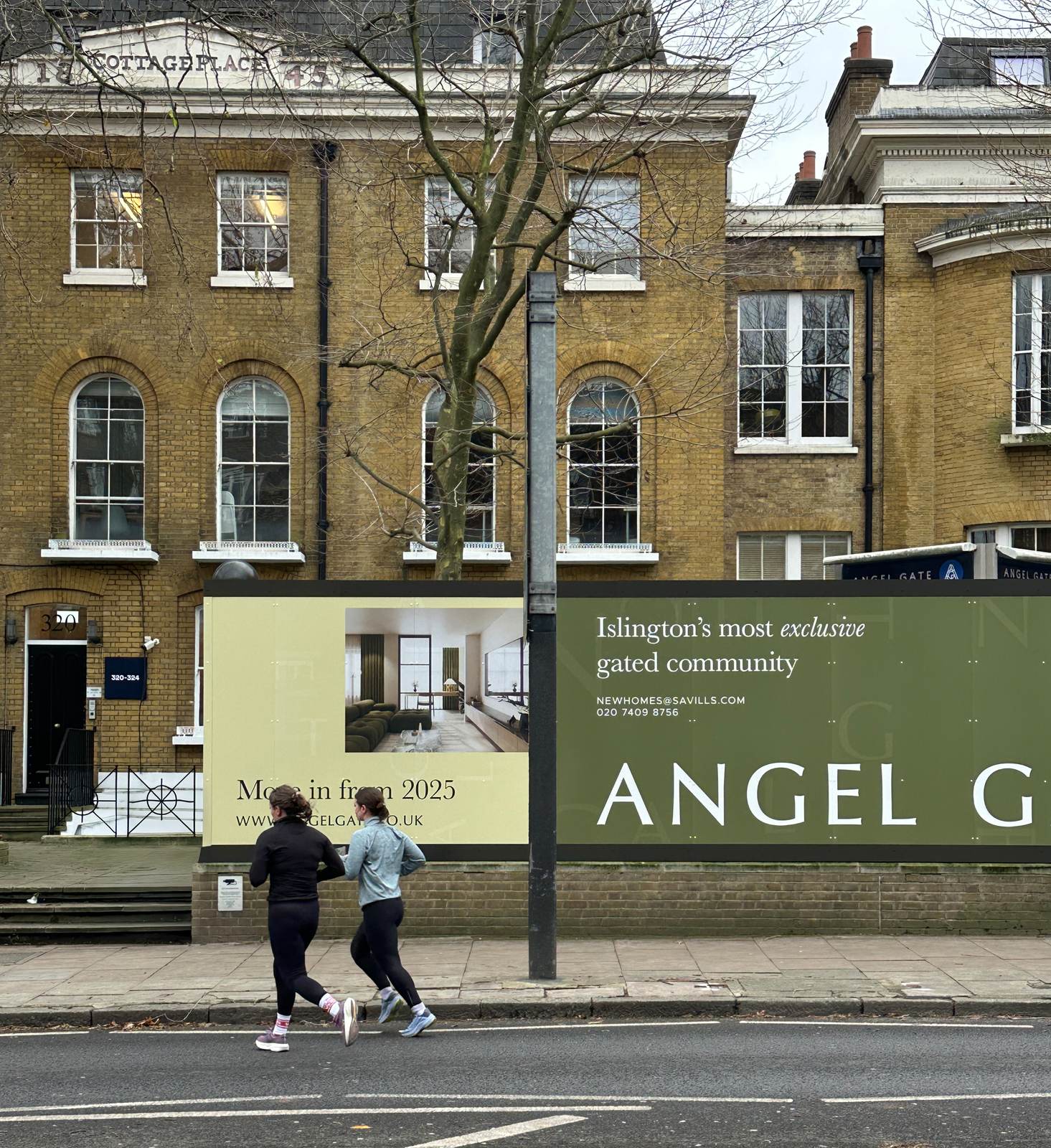
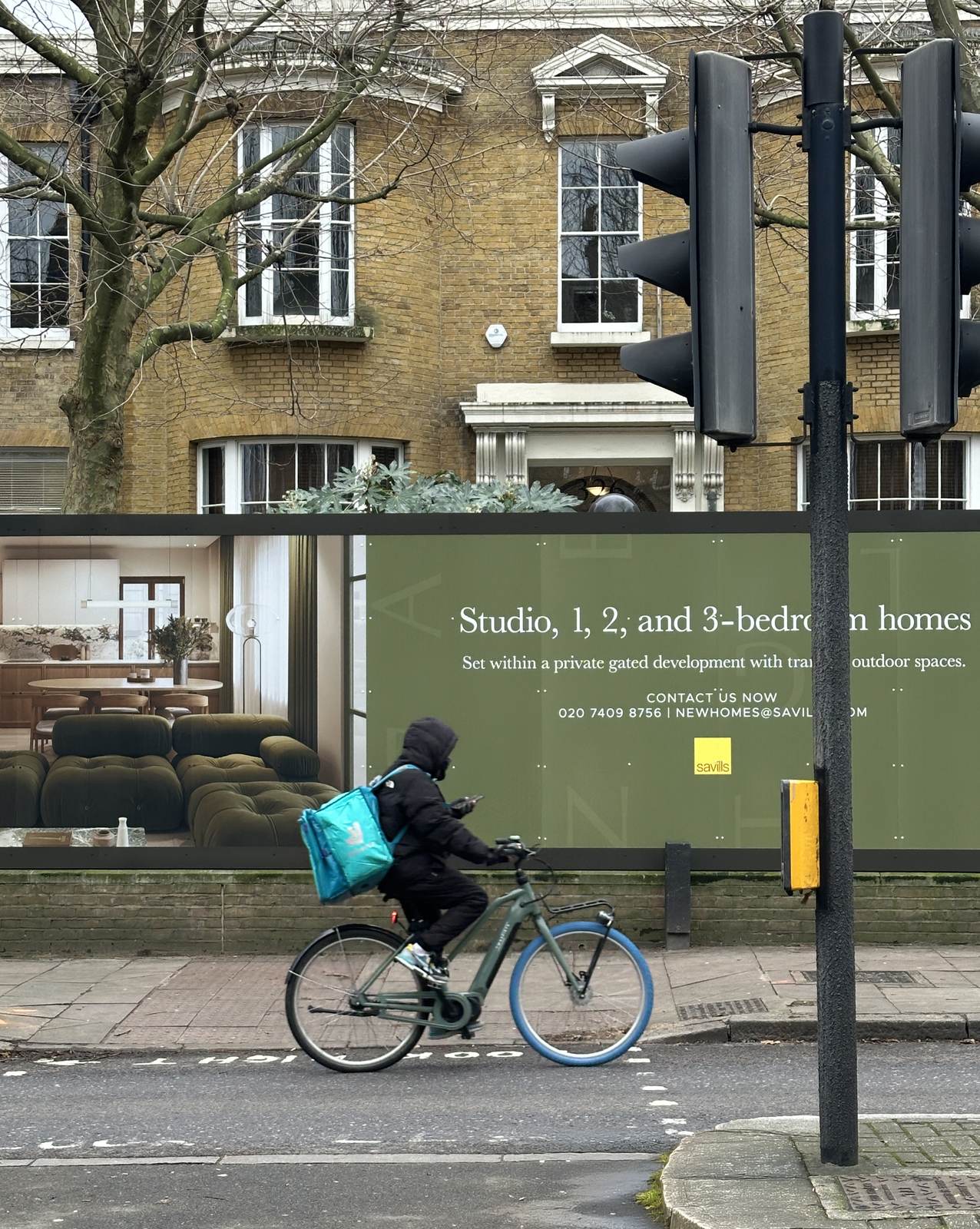
“Sixty percent of Phase 1 sold within one month of launch — all to domestic buyers. Not investors speculating on future value, but people choosing Angel Village as a home.”
The VIP launch took place in January 2026. Within one month, sixty percent of Phase 1 — approximately 53 of 88 apartments — were sold. In a London market where developments routinely take months or years to sell through, sixty percent in four weeks is exceptional.
We were credited by name in national press coverage as the luxury interior architects who cleverly reimagined the space to create modern, light-filled homes. That recognition reflects the scope of the work — not just specification, but a complete interior proposition that transformed a conventional development into something buyers responded to immediately.
The remaining apartments in Phase 1 continue to sell, with Phase 2 to follow. The specification, the CGIs, and the VR show home remain the primary sales tools — unchanged because they were right from the start.
Whether you’re at site acquisition or already in construction, the earlier we’re involved, the more value we can add.
» Get in touch